Ayunda Font Review: A Handwritten Typeface for Creative Branding
There I was, staring at a blank brand board for a local artisanal skincare line. The client wanted something warm, approachable, and personal—something that screamed "handmade" without being too cutesy or over the top. I opened my font library and started testing out different Script Handwritten options. That’s when I found Ayunda, a handwritten font with a casual style. Within minutes, it had become the center of the mood board.
Ayunda on a Logo Concept: Personality Over Perfection
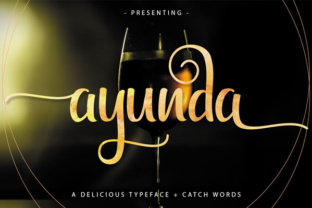
I sketched up a few logo drafts using Ayunda as the primary typeface. Its irregular stroke widths and natural flow gave it an authentic, almost hand-drawn feel. It wasn’t just a font—it felt like a signature, a personal touch. The 337 unique glyphs made it easy to play with variations, especially in the catch words section, which allowed me to add subtle flair without making the logo look cluttered. In this case, Ayunda worked well as a display font, particularly in short phrases. But I did notice that it doesn’t hold up as well in smaller sizes or for longer text, so I paired it with a clean sans serif for taglines and body copy.
Ayunda in Brand Identity Work: Fun Meets Function
Next, I moved into developing the brand identity around the Ayunda font. I used it in packaging mockups and product labels. The result? A cohesive visual language that felt both modern and intimate. For example, the product names were set in Ayunda, while the ingredients list and descriptions relied on a more structured companion typeface. This contrast helped maintain readability while still embracing the personality of Ayunda. The 337 unique glyphs also meant there were enough alternates to keep things visually interesting across different assets—postcards, stickers, even label borders.
Ayunda for Social Media Layouts: Making Every Post Feel Personal
Social media is where Ayunda really shined. I used it in Instagram post templates, particularly for captions and call-to-action buttons. The casual style of Ayunda gave the posts a friendly tone, which matched the brand's vibe perfectly. It worked especially well in carousel designs where each slide needed a slightly different feel but still maintained consistency through the use of the same premium font. The catch words feature came in handy for adding playful touches to hashtags and promotional phrases, elevating the overall aesthetic without sacrificing clarity.
Ayunda in Web Design: Hero Sections with a Human Touch
I tested Ayunda in a homepage hero section for the same project. It performed beautifully at larger sizes, especially when paired with a minimalist layout and soft background textures. The key takeaway here is that Ayunda should be reserved for headlines and short impactful statements rather than long paragraphs. Its charm lies in its imperfections, but those same qualities can reduce legibility if pushed too far. Still, for a creative studio website or a boutique brand landing page, Ayunda adds a level of warmth and uniqueness that’s hard to achieve with more rigid fonts.
Font Pairing with Ayunda: Balancing Casual and Clean
One of the most important aspects of using any Script Handwritten font is knowing how to pair it effectively. With Ayunda, I found that a modern sans serif like Montserrat or Lato works best for secondary text. These fonts provide the structure and neutrality that Ayunda lacks, allowing the handwritten font to take center stage where it belongs. When working with other script or decorative fonts, Ayunda holds its own by offering a more subdued, yet still expressive alternative. Avoid pairing it with overly ornate scripts unless you’re going for a specific layered effect—Ayunda’s strength is in its simplicity and versatility within the Fonts category.
Real-World Use Cases for Ayunda: Where It Thrives
- Bakery Packaging: Used in header titles and event announcements (e.g., “Fresh from the Oven”)
- Creative Studio Identity: Applied to taglines and mission statements for a human-centric feel
- Handmade Shop Branding: Ideal for storefront signs and window displays
- Editorial Design: Featured in magazine covers and blog headers for a relaxed, artistic edge
In all these applications, Ayunda brought a sense of authenticity and approachability. It’s not a font for everyone, but for niche projects like lifestyle brands, small businesses, or anything handmade, it delivers a unique voice that’s both stylish and readable.
When Ayunda Might Not Be the Right Choice
While Ayunda is incredibly expressive, it’s not suited for every design challenge. Projects requiring high levels of formal typography—like corporate reports, legal documents, or data-heavy dashboards—should avoid it entirely. Similarly, if your branding needs to scale into smaller text such as footnotes or fine print, Ayunda might struggle. Always test it in multiple sizes before committing. Also, consider that its casual nature may not align with luxury or ultra-minimalist aesthetics unless carefully balanced with supporting styles.
Testing Ayunda Before Committing to Client Work
Before presenting Ayunda to clients, I always create a sample document that includes various real-world scenarios. I’ll include a business card mockup, a hero section for a website, a social media graphic, and a packaging label. This helps visualize how the Script Handwritten font behaves across platforms and mediums. I also make sure to check the included alternates and ligatures to ensure the font supports the kind of dynamic design work we need. The 337 unique glyphs mean there are plenty of creative options available, but they also require thoughtful application to avoid looking inconsistent or amateurish.
Commercial Licensing Note: Always Check Before Launching
It’s crucial to remember that when using Ayunda for commercial design assets—whether it’s for logos, merchandise, or web design—you must review the licensing terms. Many free or open-source Fonts come with restrictions on their use in print-on-demand products, digital storefronts, or multi-client projects. If you're planning to build a full brand identity system with Ayunda, confirm that the license allows for such usage. You don’t want to hit a snag later when the client wants to expand their product line or launch a new site.
Ayunda in Action: From Mockups to Final Deliverables
In one recent project, I used Ayunda in a brand board for a local café aiming for a cozy, community-driven image. I placed it on signage concepts, coffee cup wraps, and even menu headers. The team loved the idea of a handwritten font bringing a personal touch to their branding. They appreciated how Ayunda could be used creatively without feeling forced. By leveraging the catch words feature, I added subtle emphasis to key phrases like “Home Baked,” “Daily Specials,” and “Local Roast,” which enhanced the storytelling aspect of the brand visuals.
The final deliverables included a logo system with Ayunda as the headline font and a secondary sans serif for information layers. The resulting brand felt alive and connected to the owner’s passion for crafting each detail by hand. That’s the power of a good Script Handwritten font in the right context.
Practical Tips for Using Ayunda in Your Projects
- Use it for display purposes only: Keep it large and let it breathe. Avoid using it in long paragraphs or small print.
- Pair it with a neutral font: Choose a clean serif or sans serif to balance the personality of Ayunda and maintain legibility.
- Test across materials: Try it on business cards, websites, and printed collateral to see how it adapts.
- Review multilingual support: If your project requires international reach, confirm Ayunda includes the necessary characters and accents.
- Check file formats: Ensure the font comes in OTF or TTF for print and WOFF/WEBFONT for web use.
Why Ayunda Stands Out Among Handwritten Fonts
What makes Ayunda special isn’t just its 337 unique glyphs—it’s how it feels. It has a natural rhythm and a quiet confidence that many other Script Handwritten Fonts lack. It doesn’t try too hard, and that’s part of its appeal. Whether you're designing a poster for a pop-up shop or a flyer for a craft fair, Ayunda brings a level of creativity that fits seamlessly into handmade and lifestyle branding projects. It’s not just a decorative font; it’s a tool that helps tell a story.
If you're a designer or brand creator who values character without compromising clarity, Ayunda is worth considering. It’s a font that invites experimentation and brings warmth to your design assets. Just remember to use it wisely and pair it thoughtfully. And above all, always double-check licensing if it’s going to be part of a professional or commercial brand identity system.